Global Japanese Sushi Rolls
Highlighted under: Around The World
I absolutely love making sushi rolls at home, and my Global Japanese Sushi Rolls have become a favorite in our household. The process of rolling sushi might seem daunting at first, but it's really an exciting way to experiment with flavors and textures. These rolls are packed with fresh ingredients and can be customized based on what I have on hand. Creating a sushi night has become a fun tradition for my family and friends, allowing us to bond over delicious food while being creative in the kitchen.
When I first embarked on my sushi-making journey, I found the combination of rice, fresh seafood, and vegetables to be magical. My Global Japanese Sushi Rolls strike a perfect balance of flavors, and each bite takes me on a culinary adventure. I recommend using high-quality ingredients and taking your time to set your rice just right; it makes a world of difference.
Over the years, I've learned that the key to great sushi lies in the rolling technique. With a bamboo mat, a bit of practice, and the right amount of pressure, you can create beautiful rolls that will impress your family and friends. Don't be afraid to experiment with fillings—this is where the real fun begins!
Why You'll Love These Sushi Rolls
- A delightful blend of fresh ingredients and flavors from around the globe.
- The satisfaction of rolling your own sushi creates a fun and interactive dining experience.
- Endless possibilities for customization, making every batch unique.
Mastering Sushi Rice
Sushi rice is a crucial element in any sushi roll, acting as both a base and a binder to hold everything together. Rinsing the rice is essential, as this removes excess starch, preventing the rice from becoming gummy. After cooking, mixing the vinegar, sugar, and salt into the rice while it’s still warm helps to infuse flavor while also achieving that desired sticky texture. Aim for a slightly glossy finish; this indicates a good balance of seasoning.
For those who may not have a rice cooker, you can still achieve perfect sushi rice on the stovetop. Use a pot with a tight-fitting lid, and bring the rice and water to a boil over medium heat. Once boiling, reduce the heat to low and cover, allowing it to simmer for about 20 minutes until the water is absorbed. Fluffing the rice after it's cooled will keep the grains separate and improve texture in your rolls.
Rolling Techniques
When assembling your sushi rolls, the placement of fillings is vital. Be sure not to overload the rice with too many fillings, as this can lead to difficulty in rolling and an unbalanced roll. I recommend keeping the fillings centralized and within the width of the rice, creating a compact and stable structure. A well-rolled sushi will retain its shape and offer a balanced bite every time.
To enhance your rolling technique, try practicing with just a few simple ingredients until you get the hang of it. As you gain confidence, experiment with different wraps or fillings to suit your taste. If the roll seems too loose, dampen your hands while rolling to evade excess rice sticking to your fingers, making it easier to manipulate. A little patience goes a long way!
Serving Suggestions and Storage
Once you've sliced your rolls and plated them, serve with small dishes of soy sauce, pickled ginger, and wasabi for dipping. These condiments not only add flavor but also cleanse the palate between different types of sushi. For a colorful touch, arrange your plated sushi with garnishes like microgreens or additional sesame seeds for visual appeal.
If you have leftovers, be sure to store them in an airtight container in the refrigerator. Sushi rolls can typically be kept for up to 24 hours, but for the best flavor and texture, consume them fresh. If you plan on making sushi a regular occurrence, consider preparing a larger batch of sushi rice and filling portions in advance, so all you need to do is assemble and roll when you’re ready to serve.
Ingredients
Gather these ingredients to make your sushi rolls!
Sushi Rice
- 2 cups sushi rice
- 2 1/2 cups water
- 1/4 cup rice vinegar
- 2 tablespoons sugar
- 1 teaspoon salt
Fillings
- 1 avocado, sliced
- 1 cucumber, julienned
- 1 carrot, julienned
- 1/2 pound sushi-grade tuna, sliced
- 1/2 pound cooked shrimp
- Sesame seeds, for garnish
Nori and Condiments
- 4 sheets of nori (seaweed)
- Soy sauce, for serving
- Pickled ginger, for serving
- Wasabi, for serving
Make sure to have all your ingredients prepped and ready before you start rolling!
Instructions
Follow these steps to create your sushi rolls!
Prepare the Sushi Rice
Rinse the sushi rice under cold water until the water runs clear. Add the rice and water to a rice cooker and cook according to the manufacturer's instructions. Once cooked, transfer the rice to a large bowl and mix the rice vinegar, sugar, and salt. Allow the rice to cool to room temperature.
Assemble the Roll
Place a bamboo mat on a flat surface and lay a sheet of nori on top, shiny side down. Wet your hands and grab a handful of sushi rice, spreading it evenly over the nori, leaving about an inch at the top edge. Layer your chosen fillings in the center of the rice.
Roll it Up
Starting from the edge closest to you, lift the bamboo mat and roll it forward tightly, pressing gently to keep the roll compact. When you reach the bare edge of nori, wet it with a bit of water to seal the roll.
Slice and Serve
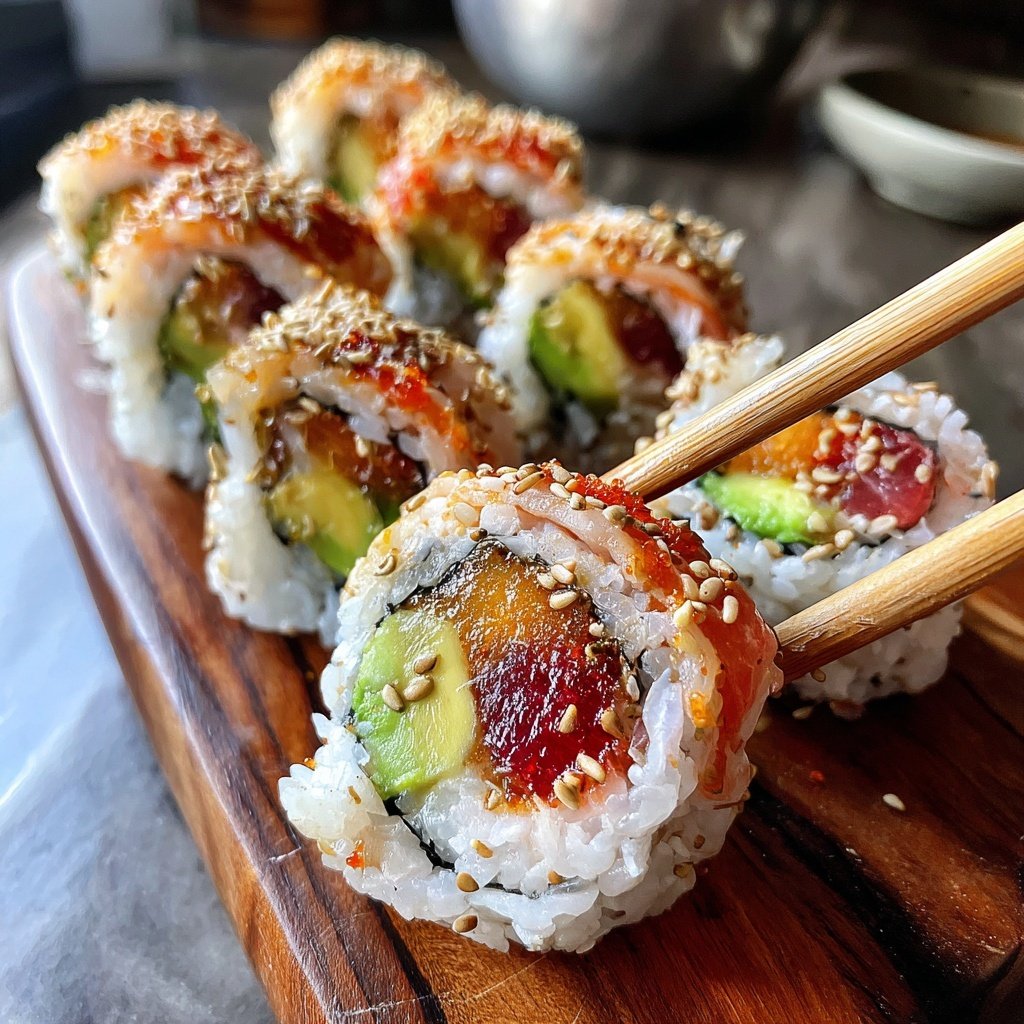
Using a sharp knife, slice the roll into 6-8 pieces. Wipe the knife with a damp cloth between cuts to ensure clean slices. Arrange the sushi on a serving platter and garnish with sesame seeds.
Enjoy your homemade sushi rolls with soy sauce, pickled ginger, and wasabi!
Pro Tips
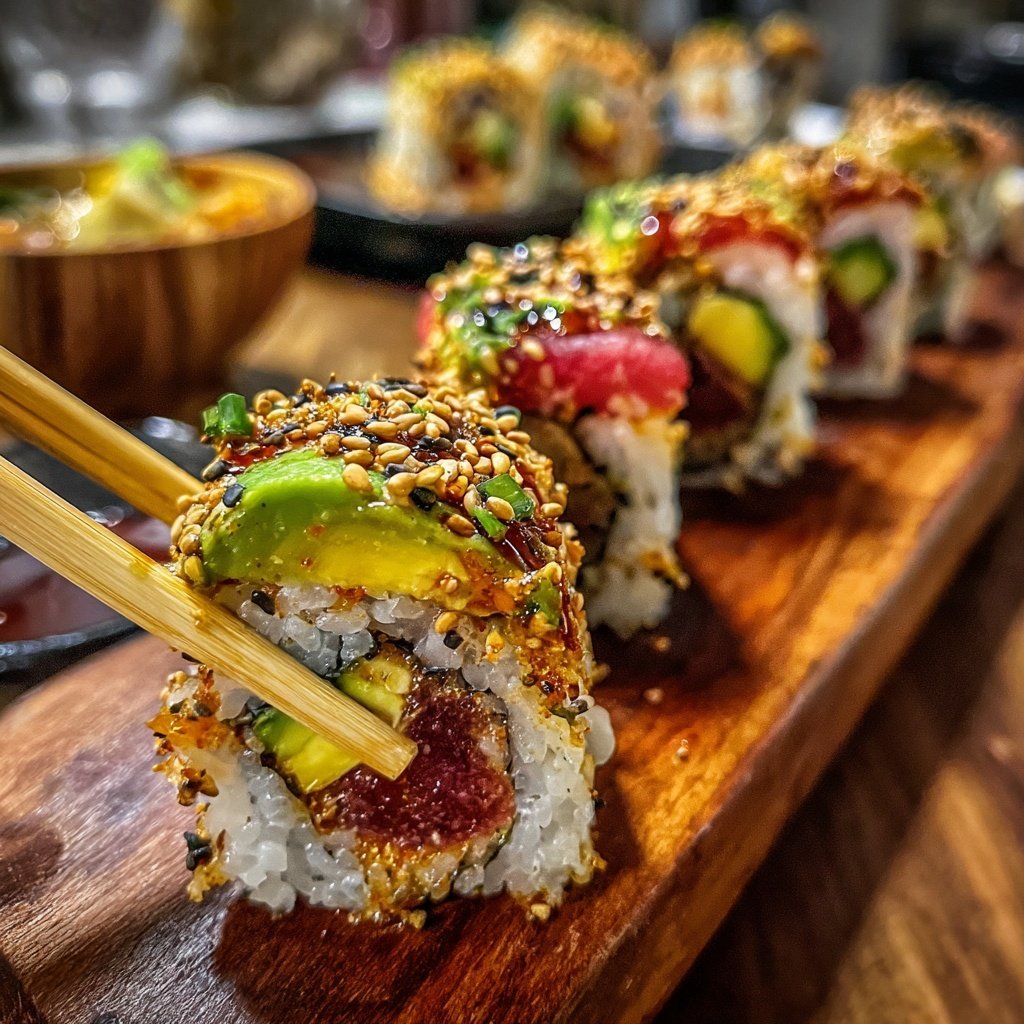
- Experiment with different fillings such as cream cheese, bamboo shoots, or even fruits like mango for a unique flavor twist. The more adventurous you are, the more fun you'll have creating sushi!
Ingredient Substitutions
If you’re looking to experiment with different ingredients, there are plenty of sushi roll variations to explore. For a vegetarian option, consider using grilled vegetables like zucchini and bell peppers, or even fruits like mango for a sweeter twist. Tofu can also be a great substitute for those looking for plant-based protein, offering a delightful texture when marinated and cooked.
Should you not have sushi-grade fish available, cooked crab meat or even thinly sliced smoked salmon can provide a similar rich flavor. Be creative with flavors by including elements such as cream cheese or spicy mayonnaise to elevate each bite and offer a unique twist on traditional sushi rolls.
Troubleshooting Common Issues
If your rolls are falling apart, it’s often a sign that the rice lacked adequate moisture or that there were too many fillings. To remedy this, make sure to press firmly when rolling and limit your fillings to what can be uniformly contained within the rice. It may take several attempts to find the right balance, but consistency will improve with practice.
Another common issue is the nori tearing while rolling. To prevent this, ensure your nori is fresh and not overly dry, which can make it brittle. You might also benefit from lightly toasting the nori over an open flame for a few seconds to enhance its flavor and pliability before assembling your roll.
Questions About Recipes
→ What type of rice should I use for sushi?
Use sushi or short-grain rice, as it becomes sticky when cooked, allowing the rolls to hold together.
→ Can I make sushi in advance?
It's best to serve sushi rolls fresh, but you can prepare the ingredients ahead of time. Just roll them right before serving.
→ How do I store leftover sushi?
Store leftover sushi in an airtight container in the fridge for up to a day. However, the rice may dry out or lose its texture.
→ Can I use other fillings besides fish?
Absolutely! You can use vegetables, cooked meats, or even fruits to create delicious vegetarian or fusion sushi rolls.
Global Japanese Sushi Rolls
Created by: The Chefwillfoods Team
Recipe Type: Around The World
Skill Level: Intermediate
Final Quantity: 4 rolls
What You'll Need
Sushi Rice
- 2 cups sushi rice
- 2 1/2 cups water
- 1/4 cup rice vinegar
- 2 tablespoons sugar
- 1 teaspoon salt
Fillings
- 1 avocado, sliced
- 1 cucumber, julienned
- 1 carrot, julienned
- 1/2 pound sushi-grade tuna, sliced
- 1/2 pound cooked shrimp
- Sesame seeds, for garnish
Nori and Condiments
- 4 sheets of nori (seaweed)
- Soy sauce, for serving
- Pickled ginger, for serving
- Wasabi, for serving
How-To Steps
Rinse the sushi rice under cold water until the water runs clear. Add the rice and water to a rice cooker and cook according to the manufacturer's instructions. Once cooked, transfer the rice to a large bowl and mix the rice vinegar, sugar, and salt. Allow the rice to cool to room temperature.
Place a bamboo mat on a flat surface and lay a sheet of nori on top, shiny side down. Wet your hands and grab a handful of sushi rice, spreading it evenly over the nori, leaving about an inch at the top edge. Layer your chosen fillings in the center of the rice.
Starting from the edge closest to you, lift the bamboo mat and roll it forward tightly, pressing gently to keep the roll compact. When you reach the bare edge of nori, wet it with a bit of water to seal the roll.
Using a sharp knife, slice the roll into 6-8 pieces. Wipe the knife with a damp cloth between cuts to ensure clean slices. Arrange the sushi on a serving platter and garnish with sesame seeds.
Extra Tips
- Experiment with different fillings such as cream cheese, bamboo shoots, or even fruits like mango for a unique flavor twist. The more adventurous you are, the more fun you'll have creating sushi!
Nutritional Breakdown (Per Serving)
- Calories: 450 kcal
- Total Fat: 15g
- Saturated Fat: 2g
- Cholesterol: 120mg
- Sodium: 500mg
- Total Carbohydrates: 63g
- Dietary Fiber: 5g
- Sugars: 5g
- Protein: 15g